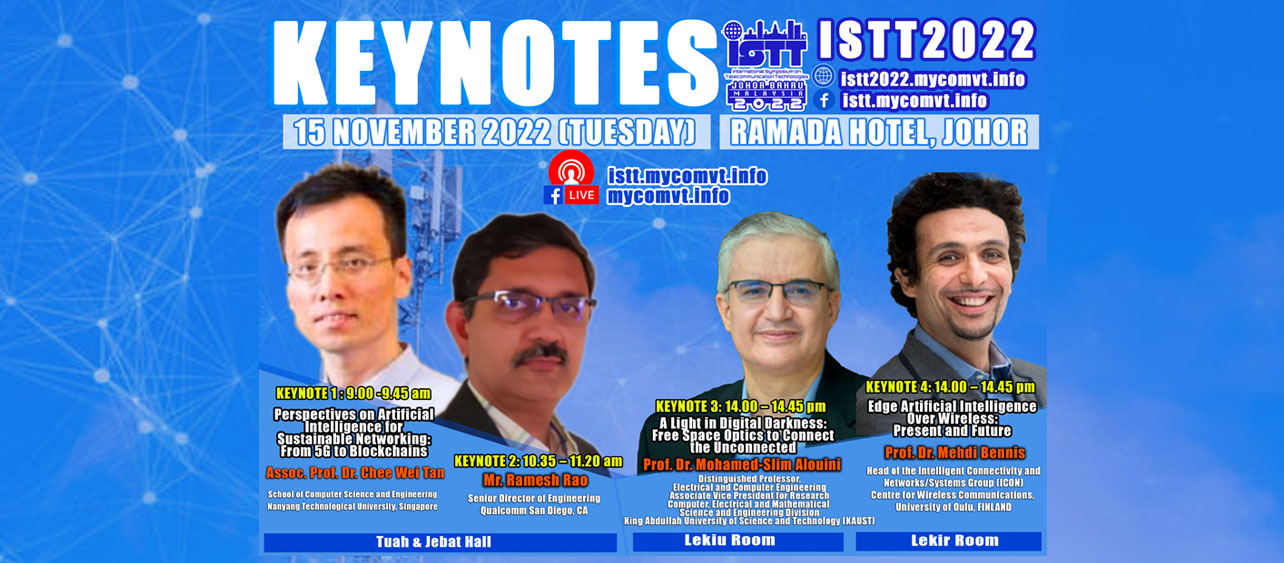
KEYNOTE 1
15 November 2022 (Tuesday)
9.00 am – 9.45 am
Tuah & Jebat Hall
Perspectives on Artificial Intelligence for Sustainable Networking: From 5G to Blockchains
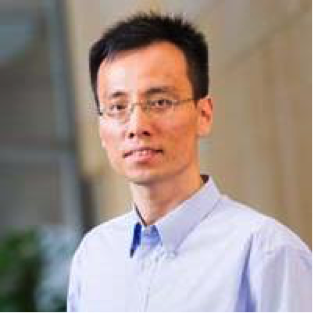
Assoc. Prof. Dr. Chee Wei Tan
School of Computer Science and Engineering
Nanyang Technological University, Singapore
Abstract
AI-native networking are emerging, as they leverage fog-cloud computing, machine learning and blockchain technologies to distribute the functions of communication, computation, control and storage closer to the end users along the cloud-to-things continuum. This has given rise to “Digital Twins” in 5G wireless network optimization and the integration of AI-native cloud infrastructure in the evolution of network architecture. We will give an overview talk survey on the past, present and future perspectives of artificial intelligence in networking and the “what,” “why,” and “how” of AI-native networking.
Speakers Biography
Assoc. Prof. Dr. Chee Wei Tan
Dr. Tan received the M.A and Ph.D. degrees in Electrical Engineering from Princeton University. His research interests are networks, cloud computing, distributed machine learning, Artificial Intelligence (AI), blockchains and AI for Health-Tech. Dr. Tan is serving as the Editor for BMC Archives of Public Health, IEEE Transactions on Cognitive Communications and Networking, IEEE/ACM Transactions on Networking, IEEE Transactions on Communications and in TPC of IEEE INFOCOM, ACM SIGMETRICS, ACM MobiHoc, IJCAI. He is serving as IEEE Distinguished Lecturer and received the Princeton University Wu Prize for Excellence, Google Faculty Award, teaching excellence awards, and was selected twice for the U.S. National Academy of Engineering China-America Frontiers of Engineering Symposium.
KEYNOTE 2
15 November 2022 (Tuesday)
10.35 am – 11.20 am
Tuah & Jebat Hall
-Title of the talk to be confirmed-
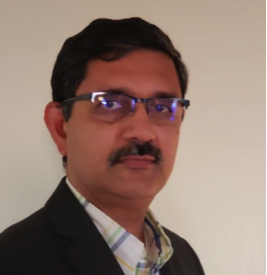
Mr. Ramesh Rao
Senior Director of Engineering
Qualcomm San Diego, CA
Abstract
Abstract will be updated soon
Speakers Biography
Mr. Ramesh Rao
Ramesh Rao is a Senior Director of Engineering in Qualcomm Technology Licensing(QTL) division’s Technology and Product Management Team in San Diego, CA. He is responsible for working with OEM’s and startups from emerging markets and startup communities; Consulting, defining and creating custom packages that jumpstarts these companies to quickly transform their innovative ideas and prototypes into successful commercial products. He has worked at Qualcomm CDMA Technologies (QCT) from 1995 to 2015, where he led the Global Hardware Application Engineering and Technical Account Management teams, supporting OEM’s on 2G, 3G and 4G technologies and launching commercial products implementing these technologies. He established and led QCT’s Customer Engineering center’s in Bangalore, India(2008) and Sao Paulo, Brazil(2011). From 2015 to 2016, he was the North American Engineering lead for a startup with product ambitions in China, India and the USA. He has been in his current role with QTL since 2016 where he has been working with licensees and startups in emerging economies across South East Asia, Latam, India and Europe and leads the setup and management of QTL Labs to support the domestic ecosystems in SEA, India, China and North America. His work in QTL leverages two plus decades of wireless industry experience, across Mobile and IoT projects spanning 5G Products, 4G Feature Phones, entry tier Smart Phones, Smart Metering, Asset Tracking, IIoT, Point of Sales(POS), Smart City Deployments, University Training Programs etc. He has a Bachelor’s degree in Electronics and Communications Engineering and a Master’s degree in Computer Science.
KEYNOTE 3
15 November 2022 (Tuesday)
14.00 pm - 14.45 pm
Lekiu Room
A Light in Digital Darkness: Free Space Optics to Connect the Unconnected
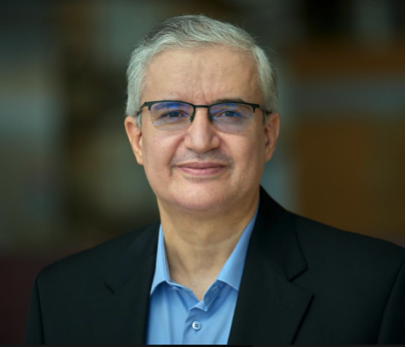
Prof. Dr. Mohamed-Slim Alouini
Distinguished Professor, Electrical and Computer Engineering
Associate Vice President for Research
Computer,
Electrical and Mathematical Science and Engineering Division
King Abdullah University of Science and Technology (KAUST)
Abstract
Despite the ubiquitous digital connectivity that we experience all around us, it is a fact that almost half of the population of the world is still “offline” due to the lack of a robust Internet and communications infrastructure in many places on the globe. The reason why such digitally dark spots still exist in the world is mainly two-folds. For one, economically backward or thinly scattered populations are not viable for relatively larger investments in communications infrastructure. Secondly, a hostile geography/terrain raises the cost of installing optical fibers and other equipment. Thus, its no wonder that many big Internet giants such as Amazon, Facebook, and SpaceX, have attempted to reach the hitherto “digitally inaccessible” regions by providing connectivity through satellites or high altitude platforms (HAPs). A constellation of satellites/HAPs provides a more cost-effective and reliable alternative to the deployment of optical fiber and related equipment in such locations of the world. Because of the large chunks of relatively unlicensed bandwidth available in the optical spectrum, there is a great opportunity to use lasers for ground gateway station satellite/HAPs, and inter-satellite or inter-HAP communications, a communications model known as the free-space optics (FSO). Towards that end, this talk examines the FSO communications from the perspective of satellite and HAP communications. In this regard, some new pointing, acquisition
and tracking aspects are presented. Furthermore, this talk goes also through the adaptive optics and relaying schemes that are needed to deal with atmospheric turbulence which affects such kind of networks.
Speakers Biography
Prof. Dr. Mohamed-Slim Alouini
Mohamed-Slim Alouini was born in Tunis, Tunisia. He received the Ph.D. degree in Electrical Engineering from the California Institute of Technology (Caltech) in 1998. He served as a faculty member at the University of Minnesota then in the Texas A&M University at Qatar before joining in 2009 the King Abdullah University of Science and Technology (KAUST) where he is now a Distinguished Professor of Electrical and Computer Engineering. Prof. Alouini is a Fellow of the IEEE and OPTICA (Formerly the Optical Society of America (OSA)). He is currently particularly interested in addressing the technical challenges associated with the uneven distribution, access to, and use of information and communication technologies in rural, low-income, disaster, and/or hard-to-reach areas.
KEYNOTE 4
15 November 2022 (Tuesday)
14.00 pm - 14.45 pm
Lekir Room
Edge Artificial Intelligence Over Wireless: Present and Future
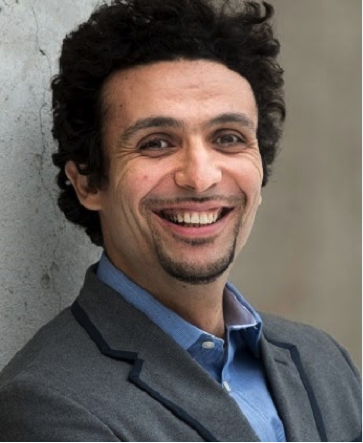
Prof. Dr. Mehdi Bennis
Head of the Intelligent Connectivity and Networks/Systems Group (ICON)
Centre for Wireless Communications,
University of Oulu, FINLAND
Abstract
The current premise in classical ML is based on a single node in a centralized and remote data center with full access to a global data set and a massive amount of storage and computing. Nevertheless, the advent of a new breed of intelligent devices ranging from drones to self-driving vehicles, makes cloud-based ML inadequate. This talk will present the vision of distributed edge intelligence featuring key enablers, architectures, algorithms, and some recent results in an exciting and rapidly advancing area.
Speakers Biography
Prof. Dr. Mehdi Bennis
Dr Mehdi Bennis is a tenured full Professor at the Centre for Wireless Communications, University of Oulu, Finland, Academy of Finland Research Fellow and head of the intelligent connectivity and networks/systems group (ICON). His main research interests are in radio resource management, heterogeneous networks, game theory and distributed machine learning in 5G networks and beyond. He has published more than 200 research papers in international conferences, journals and book chapters. He has been the recipient of several prestigious awards including the 2015 Fred W. Ellersick Prize from the IEEE Communications Society, the 2016 Best Tutorial Prize from the IEEE Communications Society, the 2017 EURASIP Best paper Award for the Journal of Wireless Communications and Networks, the all-University of Oulu award for research, the 2019 IEEE ComSoc Radio Communications Committee Early Achievement Award and the 2020-2021 Clarivate Highly Cited Researcher by the Web of Science. Dr Bennis